WHAT IS DISEASE?
Looking beyond the name of the condition.
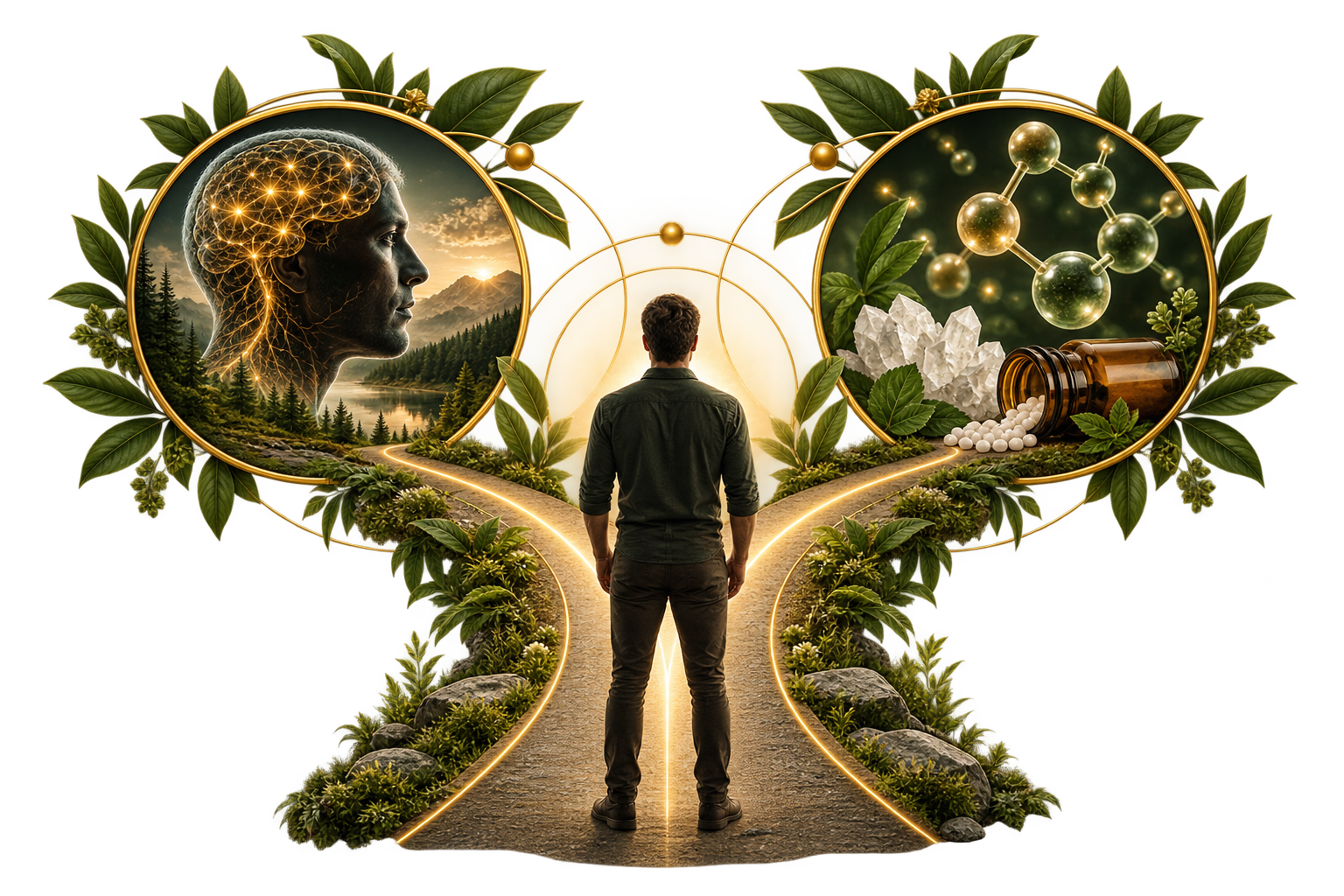
Disease is a broad term used to describe changes in health and normal function. A diagnosis can be important, but the name of a condition does not necessarily tell us everything about the individual experiencing it.
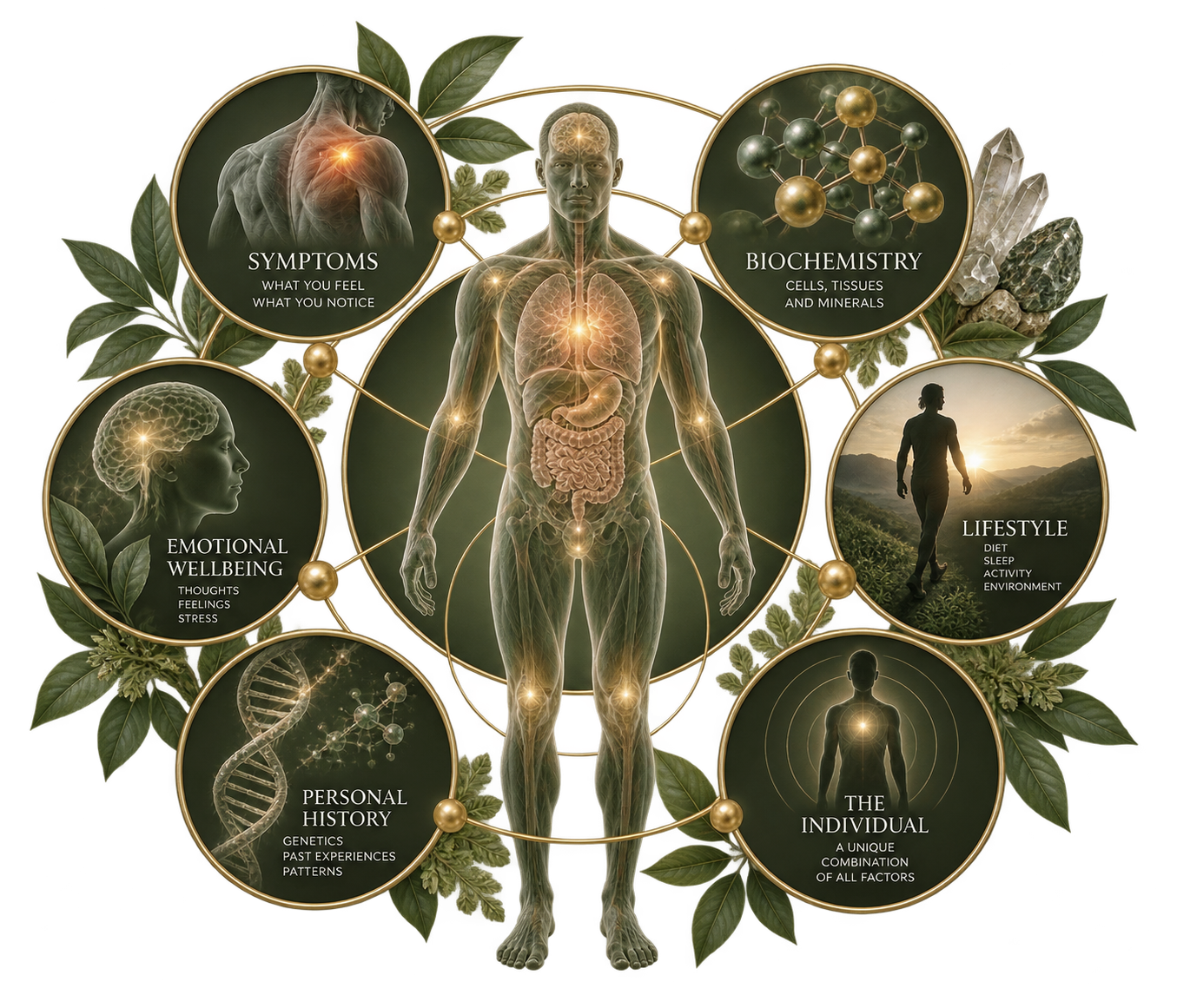
Within my work, I’m interested in the wider picture — what is happening physically, what patterns are present, and what other factors may be relevant to the person as a whole.
The traditional Biochemic System provides another framework through which these patterns can be considered, alongside the individual’s symptoms, history, lifestyle and circumstances.
The condition has a name. The individual has a story.
DISEASE IS MORE THAN A LABEL
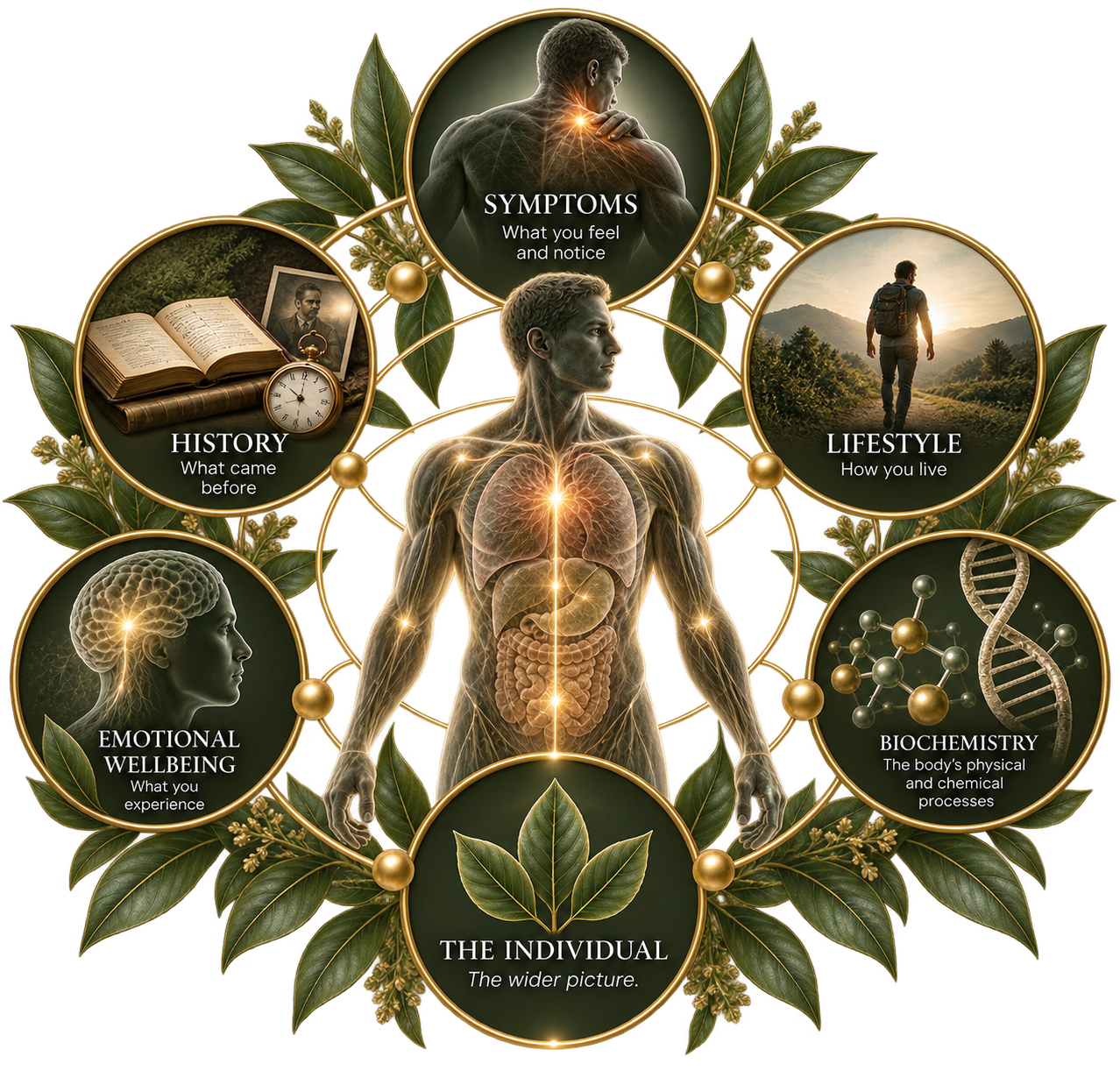
The diagnosis describes the condition. It does not describe the whole person.
WHAT CAN INFLUENCE HEALTH?
Health rarely exists in isolation.
01 — PHYSICAL
Genetics, injury, illness, sleep, movement and the physical demands placed on the body.
03 — EMOTIONAL
Stress, significant experiences and emotional patterns can influence how a person feels and functions.
02 — BIOCHEMICAL
Nutrition, minerals and the many chemical processes involved in normal human physiology.
04 — LIFESTYLE & ENVIRONMENT
Work, relationships, habits, surroundings and everyday circumstances all form part of the wider picture.
Rather than reducing a problem to one cause, I look at how the different parts of the individual picture may fit together.
LOOKING AT THE INDIVIDUAL
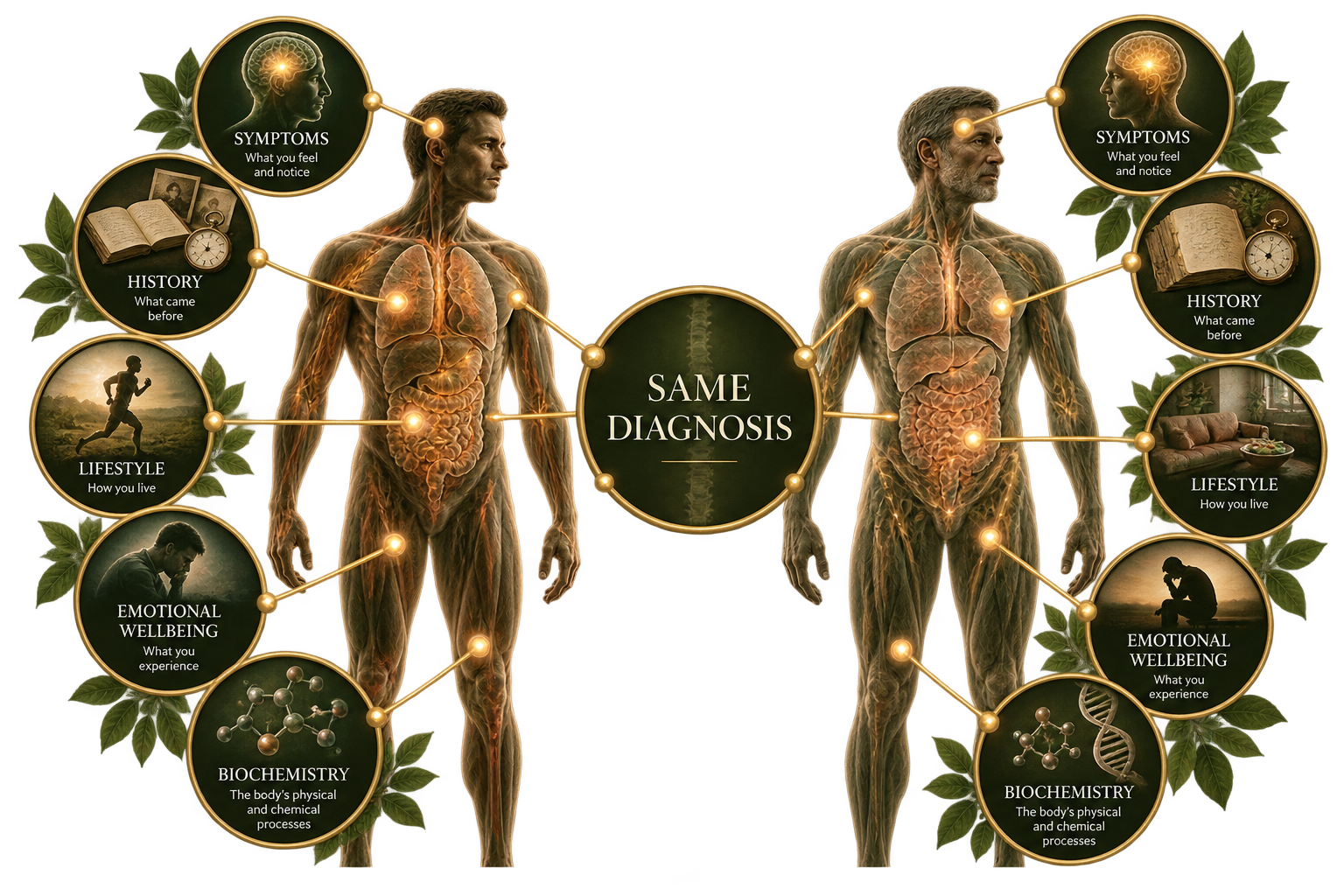
The same diagnosis can look very different from one person to another.
Two people may arrive with the same diagnosis or similar symptoms, yet their experiences can be very different.
I look beyond the name of the condition to understand the individual picture — what you are experiencing, when it began, what has happened around it, and the patterns that may be present.
This means considering your symptoms, personal history, lifestyle, emotional wellbeing and biochemistry together rather than viewing each area in isolation.
The condition may be shared. The individual picture is unique.
HOW I LOOK AT THE WHOLE PICTURE
Bringing the different parts together.
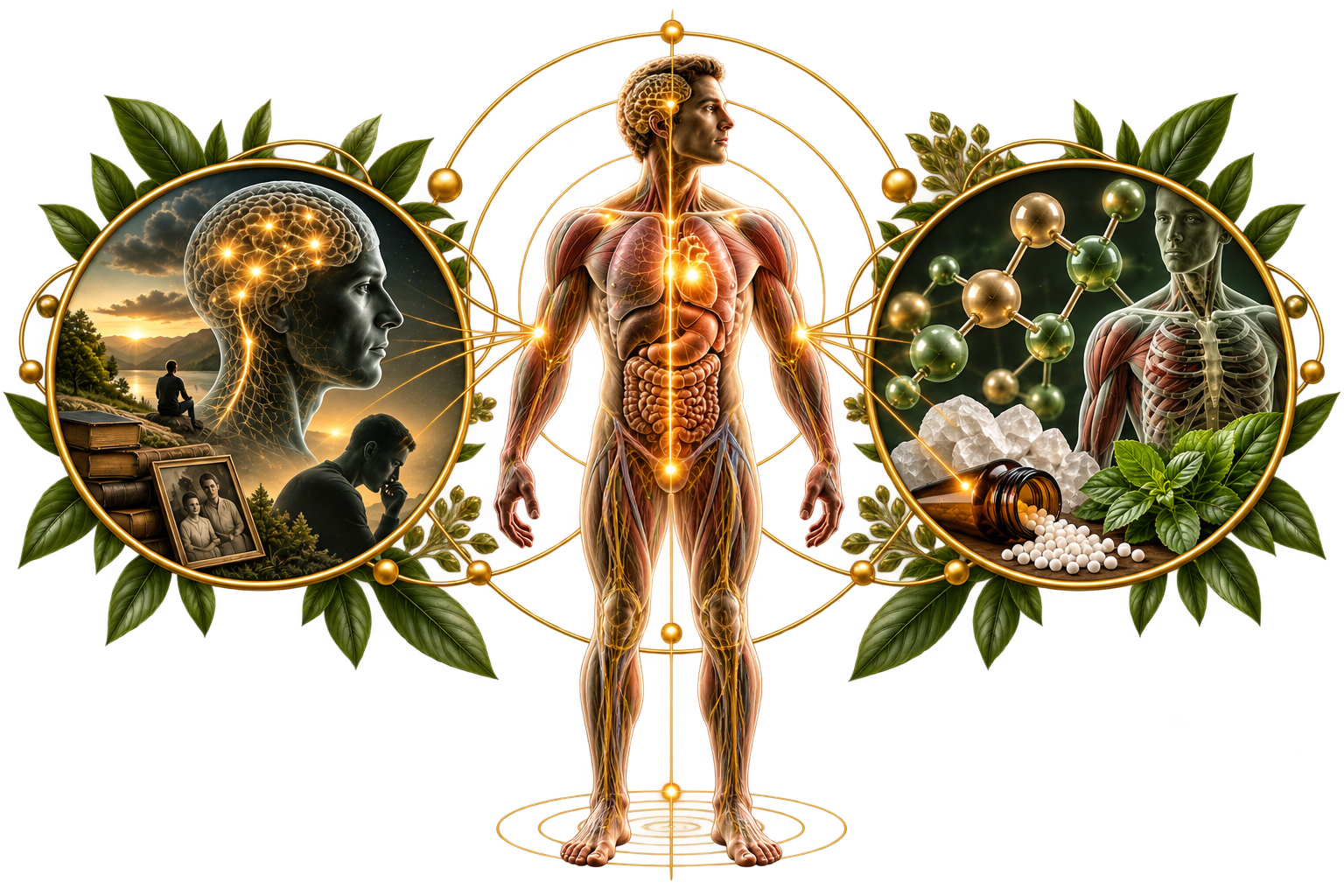
Rather than focusing on one symptom or one area in isolation, I look at the relationships between what you are experiencing physically, your personal history, lifestyle, emotional wellbeing and individual biochemistry.
The aim is to build a clearer picture of what is happening for you as an individual and identify the areas that may be useful to explore further.
This wider picture then helps guide the approach we take together.
SO, WHAT DOES THIS MEAN FOR YOU?
Understanding comes before deciding what to do next.
When you come to me, we begin by understanding your individual picture — what you are experiencing, when it began, what else was happening around that time, and the physical, emotional, lifestyle and biochemic patterns that may be relevant.
From there, we can decide which approach is most appropriate to explore — whether that involves Psychosomatic Analysis, Biochemic Design, or a combination of the two.
We start with the person, not simply the condition.
“While the English word “disease” looks like it uses this Latin prefix, it actually comes from Old French (des-aise), meaning “lack of ease.””
“Disease is an alarm signal, a friend that calls to inform us of danger. Disease is an effort to prevent death. ”
HOW I WORK WITH YOU
Understanding first. Then deciding what may be useful.
No two people are exactly the same. The approach shouldn’t be either
01 — LISTEN
We begin with what you are experiencing now — your symptoms, concerns and what has brought you to me.
03 — EXPLORE
From that wider picture, we can consider whether Psychosomatic Analysis, Biochemic Design, or a combination of the two may be appropriate to explore.
02 — BUILD THE PICTURE
We look more widely at your history, lifestyle, emotional wellbeing, physical patterns and individual biochemistry.
04 — PERSONALISE
Any work we decide to undertake is shaped around your individual picture rather than simply the name of a condition.
WHERE DO I START?
You don’t need to know which approach is right for you.
If you’re unsure whether Psychosomatic Analysis, Biochemic Design, or a combination of the two is most appropriate, we can begin with a conversation.
A free 20-minute Discovery Call gives you the opportunity to tell me briefly what you’re experiencing, ask questions and understand how I work.
There’s no obligation to continue.
Already know you’d like to begin? Book an Initial Consultation →